|
Dear members of the ILCB community,
I hope you had a relaxing break. I wish you a very happy, successful, and interdisciplinary New Year!
I am already looking forward to all the exciting events that will bring us together, starting with Abdellah Fourtassi’s HDR defence and the terrific two-day workshop organised by our MASCO students on the mysteries of truth and bias. They couldn’t have chosen a more timely topic!
As you will see in the portrait section, we welcome back one of our former ILCB postdocs who has been appointed permanent CNRS researcher at LPL. Well done Ladislas! We are also happy to welcome Professor Shelley Tong from the University of Hong Kong who will stay with us for 6 months. Her work on the link between statistical learning, language and dyslexia is of major interest to many of us. Feel free to get in touch. |
| |
|
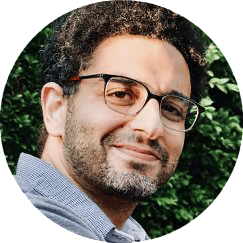
Prof. Shelley Xiuli Tong |
|
Prof. Shelley Xiuli Tong, Ph.D., is visiting ILCB and CRPN this semester. Shelley Xiuli Tong is a Full Professor at the University of Hong Kong’s Faculty of Education where she directs the Speech, Language, and Reading Lab. Recognized as an RGC Research Fellow and Fulbright Senior Scholar, her research, which has been funded by the U.S. National Academy of Education and the Hong Kong Research Grants Council, focuses on utilizing cognitive-behavioural, neurophysiological, and machine learning approaches to investigate the cognitive and neural mechanisms underlying statistical learning in children with dyslexia; the roles of prosodic reading in bilingual reading comprehension difficulties; and optimal solutions for classifying dyslexia, autism, and hearing-impairment.… |
|
|
| |
|
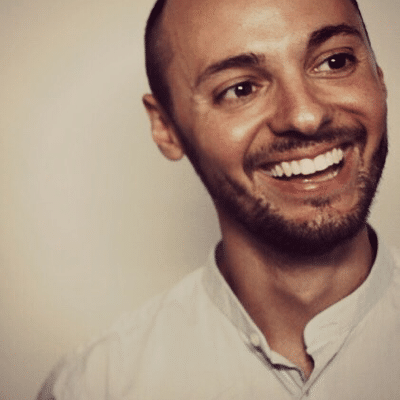
Ladislas Nalborczyk |
|
Ladislas Nalborczyk, a former ILCB postdoc, has been freshly appointed CNRS permanent researcher at the Laboratoire Parole et Langage (LPL). Ladislas’s research combines experimental (e.g., psychophysics, EMG, M/EEG, TMS) and computational (e.g., mathematical modelling, machine learning) methods to better understand the conscious experience, the cognitive mechanisms, and the neural underpinnings of inner speech, mental/motor imagery, and synesthesia. Ladislas completed a joint PhD in cognitive neuroscience and experimental psychology at… |
|
|
| |
|
Modeling the initial state of early phonetic learning in infants |
|
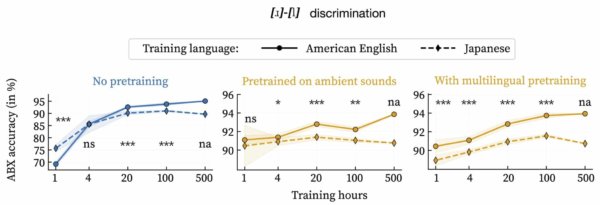
The discrimination between [ɹ] and [l] sounds –as in the English minimal pair "rip" and "lip"– can be learned by an unsupervised model such as the self-supervised contrastive predictive coding model (Oord et al. 2018). Performance –ranging from 50% at chance to 100% for perfect discrimination– depends on a number of factors, including: the hours of training data; the contrastive value of the phonemes in the training language (e.g., American English vs. Japanese); and, most relevant here, on how model parameters are initialised before training.
The figure contrasts the outcomes for random initialisation, pre-training on ambient sounds (animal vocalisation and other environmental sounds, excluding human speech and music) and pre-training on multilingual speech (18 European languages, excluding Germanic languages). Pre-training strategies have a strong impact on the shape of the developmental trajectories predicted by the model. This effect may be interpreted in terms of evolutionary influences affecting internal developmental processes.
Figure adapted from
Maxime Poli, Thomas Schatz, Emmanuel Dupoux, et Marvin Lavechin
Modeling the Initial State of Early Phonetic Learning in Infants
2025. Language Development Research 5 (1). – @HAL
|
| |
|
"Children approach language by learning parts and constructing wholes. But they can also first learn wholes and then discover parts. We demonstrate this understudied yet impactful process in children creating language without input. Whole-to-part learning thus need not be driven by hard-to-segment input and is a bias that children bring to language."
Susan Goldin-Meadow & Inbal Arnon
Whole-to-Part Development in Language Creation
2025. Trends in Cognitive Sciences 29 (1): 12‑14
|
| |
|
How Machine Learning is Transforming the Science of Language Acquisition |
|
Abdellah FOURTASSI will be defending his habilitation on Friday, January 17th at 14:00, at Fruman, 2ème étage, campus Saint-Charles. |
|
|
| |
|
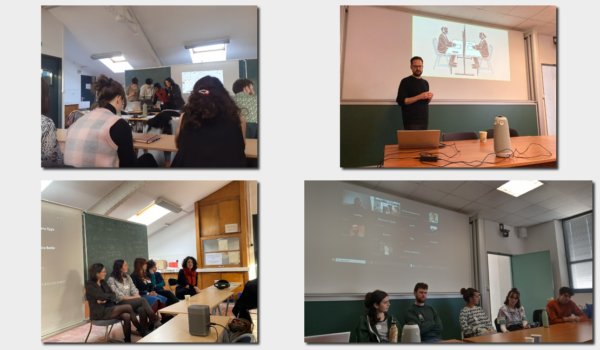
Socially interacting about social interactions. Photos S.G. et al.
Multimodality in Social Interactions 2.0
The 2nd edition of the workshop on Multimodality in Social Interactions—supported by ILCB—was a brilliant scientific success. It gathered ~20 attendees online and ~50 attendees on-site to discuss the pivotal role of multimodal interaction—such as gaze, gesture, prosody, and alignment—in communication and language learning.
|
| |
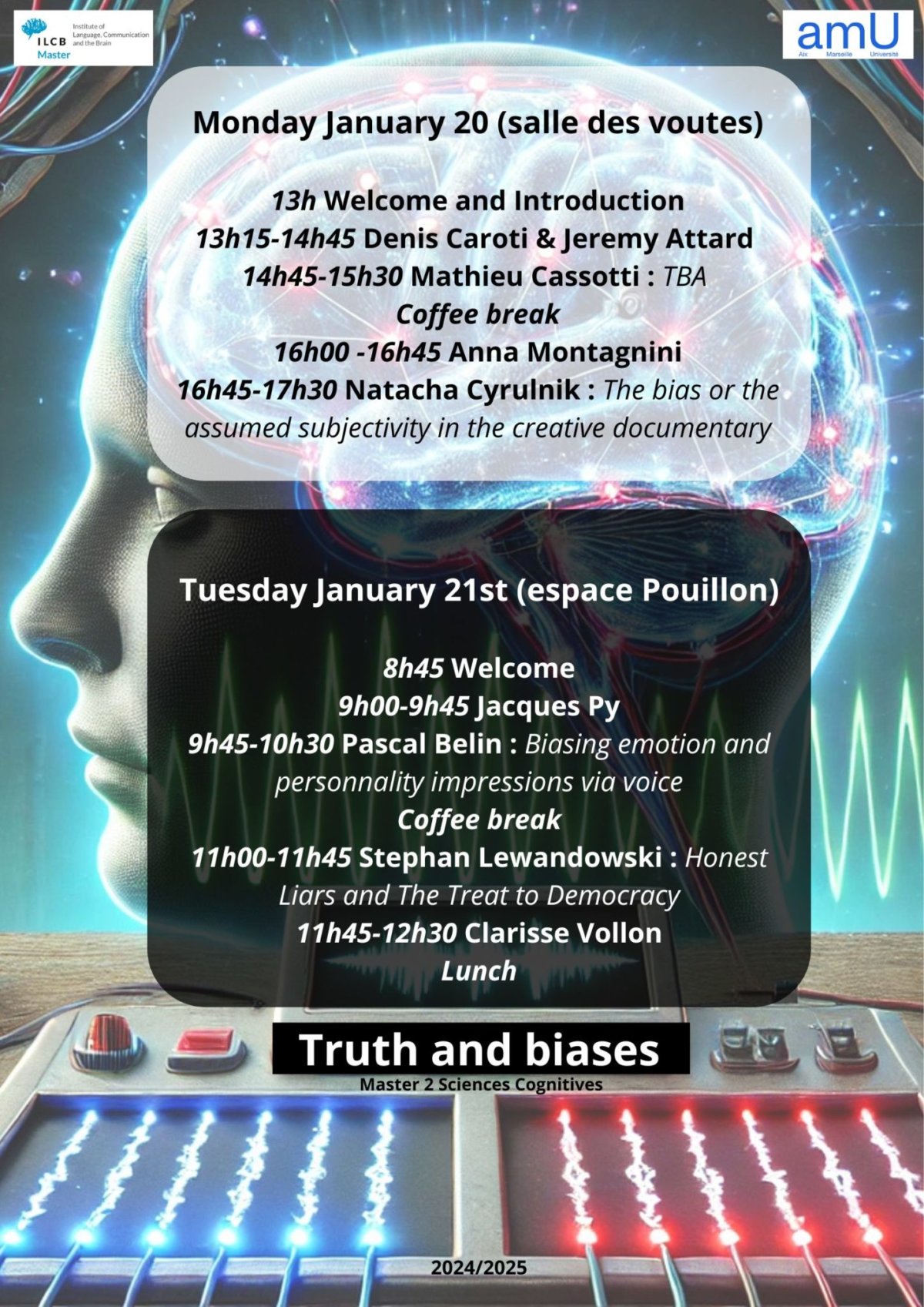
Exploring Truth and Biases in Cognitive Science
20-21 Jan 2025 Marseille
The concepts of truth and bias are central to our understanding of cognition, decision-making, and societal structures. This workshop explores the dynamic interplay between truths—objective or perceived—and biases, which shape how we interpret, process, and act upon information.
Organized by the Master’s Students in Cognitive Science at Aix-Marseille University. |
| |
M2 MASCO cognitive engineering projects
24 Jan 2025 Marseille
Students have been tasked with developing a project in teams, using the knowledge and skills they have acquired during their studies as well as their creativity, around the capture and manipulation of neuro/physiological signals and prototyping. The result of this research will be presented live!
The day will start with a seminar on « Une ingénierie de la perception : vers un langage des sons » by Mitsuko Aramaki and Salomé Sudre of PRISM laboratory.
Organized by the IngéCo team: Deirdre Bolger, Thierry Legou, and Christelle Zielinski. |
| |
|
Please always check the events page on the ILCB website for the latest update. |
| |
|
Abdellah FOURTASSI'S Habilitation Defense |
|
"How Machine Learning is Transforming the Science of Language Acquisition"
Jan 17h, 2025, at 2:00 PM @ Frumam, 2ᵉ étage, campus Saint-Charles |
|
|
| |
|
Exploring Truth and Biases in Cognitive Science |
|
Jan 20th 1:00 PM to Jan 21st 12:30 PM @ Salle des Voûtes |
|
|
| |
|
MaSCo students present their projects on cognitive engineering |
|
Jan 24th, 2025 at 9:00 AM @ Espace Pouillon |
|
|
| |
|
Olivier COLLIGNON'S lunch talk |
|
Feb 28h, 2025 @ -- |
|
|
| |
|
The annual ILCB docs & postdocs workshop |
|
Mar 27-28th, 2025 @ --
|
|
|
| |
ILCB is affiliated to Aix-Marseille Université, CNRS, INSERM, and Université d'Avignon
5 avenue Pasteur 13604 Aix-en-Provence Cedex 1 B.P. 80975 +33 (0)4 13 55 36 31
Copyright © ILCB 2024
| |
|